
Located at the confluence of the Adour and Nive rivers, Bayonne has always been at the crossroads of different cultures. Geographically, its proximity to Spain, the Pyrenees, the Landes and the Atlantic Ocean is a key factor. And while Basque culture is dominant today, it has also been profoundly shaped by Gascon culture.
Bayonne, Baiona, Bayoune, Bayona
An enviable geographical location
Since the 12th century, Bayonne has been a hub of regional trade, thanks above all to its geographical location, which is reflected in its name: in Basque, ibai ona means “the good river”.
Bayonne is also on the route to Santiago de Compostela, on the Camino del Norte. Sainte-Marie Cathedral is now listed as a World Heritage Site on the “French Pilgrimage Route to Santiago de Compostela”.
At the confluence of the Adour and Nive rivers, not far from the Atlantic Ocean and Spain, Bayonne attracted a great deal of interest and had to fortify itself to justify its Latin motto: nunquam polluta, “never polluted”.
The English parenthesis
In 1152, Eleanor of Aquitaine married Henry Plantagenet, King of England: Bayonne became part of the Kingdom of England, and remained so for almost 3 centuries, consolidating the town’s growth by promoting trade with Northern Europe in particular. Although few traces of English rule remain, you can still see vestiges of it on the keystones of Bayonne Cathedral, where the French lilies give way to the three leopards symbolizing the power of the kings of England.
New mouthpiece
At the end of the Hundred Years’ War, in 1451, when the town returned to the Kingdom of France, the port of Bayonne was in decline. The mouth of the Adour drifts to Port d’Albret (now Vieux-Boucau, literally “old mouth”), 32 km from Bayonne.
In 1571, Charles IX commissioned engineer Louis de Foix to build a new channel. In 1578, a flood on the Nive completed Louis de Foix’s work and the Adour took its present course. Now located just a few kilometers from the ocean, the port of Bayonne is finally back in the limelight.

Bayonne, Gascon or Basque?
Precisely: both! And that’s its character, and one of its greatest assets. Its history bears witness to this. Today’s capital of Iparralde (Northern Basque Country), it was part of Gascony on the eve of the French Revolution. The oldest written source from Bayonne is the 14th century “Livre des Etablissements”. One part is in Latin, the other in Gascon. This Gascon influence is reflected in the street names (Pannecau, Pontrique, la Plachotte).
The opening of the Fêtes de Bayonne, las Hèstas de Baiona in Gascon or Baionako Bestak in Basque, features the city’s 3 languages, French, Gascon and Basque.
An ideal location for excursions to the Basque Country and the southern Landes region!
Bayonne makes an ideal base camp for your excursions. You can go sunbathing at the beach, at Anglet or Biarritz, in less than 10 minutes; discover another Pays d’art et d’histoire in Saint Jean de Luz-Ciboure or one of the most beautiful villages in the Northern Basque Country (Espelette, Ainhoa, Sare) in less than 30 minutes. Saint-Jean-Pied-de-Port is about 1 hour’s drive or train ride away, a superb route with breathtaking scenery.
You can reach the Landes coast, in Capbreton for example, in just 20 minutes. As for the Southern Basque Country, you can reach San Sebastian in 40 minutes, and Bilbao and its Guggenheim Museum in less than 2 hours. And if you don’t have a car, you can even get there by train or bus. The Pyrenees offer a wide range of hiking trails, including La Rhune and its famous little train, which departs from Bayonne in 40 minutes. And if you want to go snowshoeing, hiking, donkey-riding or cycling in the Iraty forest, Europe’s largest beech forest, you’ll need to drive just under 2 hours!
You’ll also like

The southern Landes coast
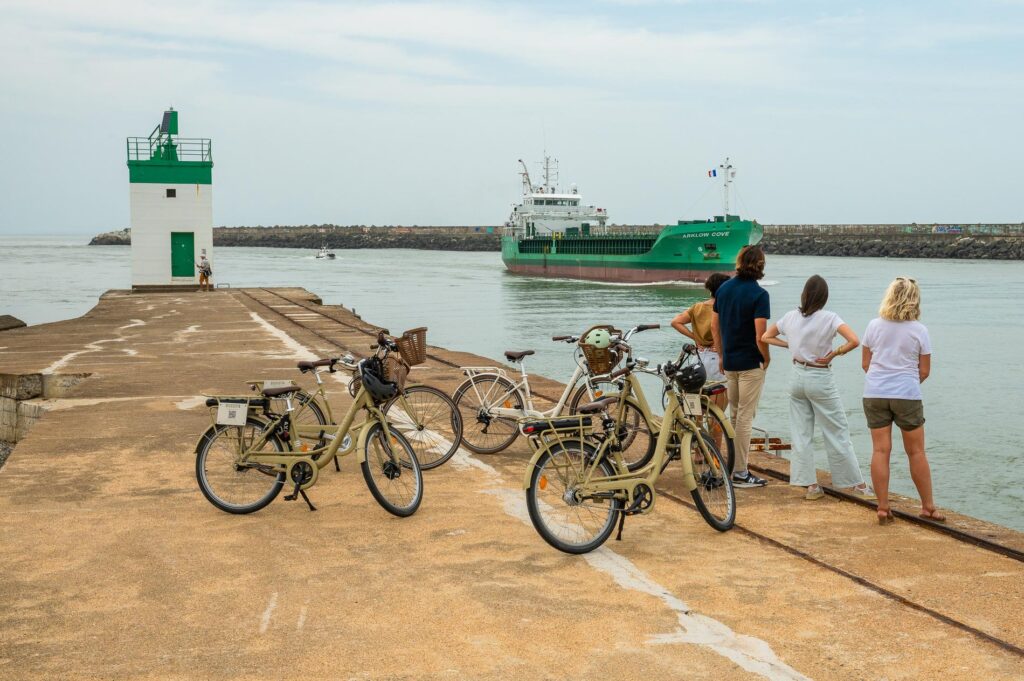
Wild beaches just a stone’s throw from Bayonne
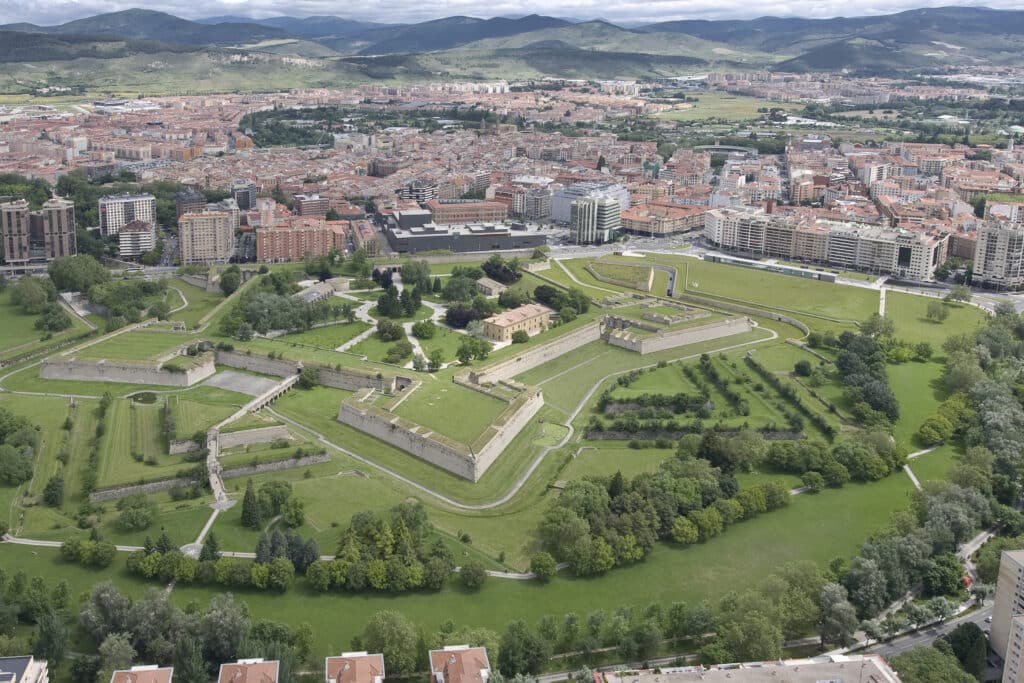
San Sebastian, Bilbao, Pamplona
The three pearls of the southern Basque country
Activities
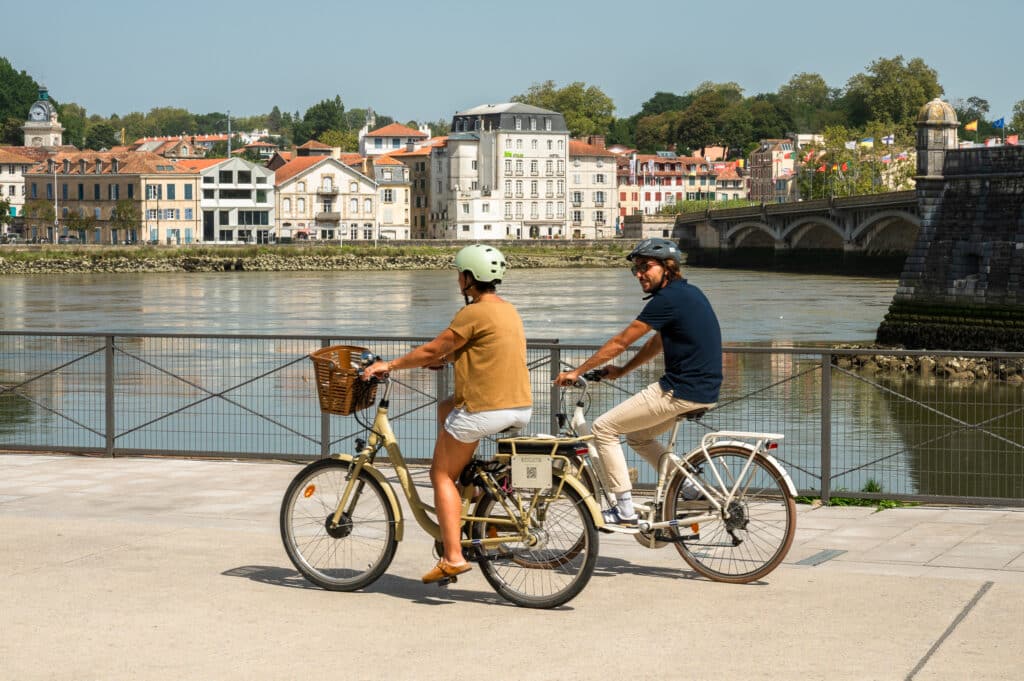
What to do in and around Bayonne?